
Thursday, 12 December 2013

Wednesday, 11 December 2013
Monday, 9 December 2013
Location Sheet
Production Schedule
Location Visit Sheet
Programme Title: Happy Days
|

Access to location via:
We will catch the first bus to Romford, then the next bus to Lakeside, afterthat we walk to the location.
Name and number of location contact:
Denise Talbot - 02089769767
|
Health and Safety Issues to note:
|
Potential Filming Problems :
|
Additional Notes: (map of area/weather forecast etc)
 |
Risk Assessment
Risk Assessment
Group Members: Stacey Talbot, Laura Bankole, Lauren Quashie, Michelle Nduku Location: Stacey's Nan's House
Hazard
|
Person(s) at Risk
|
Likelihood of Hazard
1 – Extremely Unlikely
5 – Extremely Likely
|
Severity of Hazard Outcomes
1 – Very Low Risk
5 – Very High Risk
|
Risk Level
(Likelihood + Severity)
2
|
Measures to Take to Manage Risk
|
Risk Managed?
Y/N
|
Being cut from a knife
|
One person
|
2
|
2
|
4
|
Cello tape around the edge of the knife
|
Yes
|
Being ran over by the car
|
Four people
|
3
|
4
|
7
|
Someone to watch the traffic
|
Yes
|
Being burned by the stove
|
One person
|
4
|
3
|
7
|
Turn the power so its not on the highest
|
Yes
|
Closing fingers in the freezer
|
Two people
|
1
|
1
|
2
|
Be careful closing the freezer
|
Yes
|
Robert Clack School: Lower Site 02082704222
Other Contacts: Stacey’s Nan 07957350699
Costumes and Props
Costumes and Props
Character Name: Lottie Street
| |
Costume: Cream jumper, jeans
|
Props: Fake blood, chopping board, knife and fake finger
|
Character Name: Alex Street
| |
Costume: shirt, trousers and tie - all black & grey coat
|
Props: Gym bag
|
Character Name:
| |
Costume:
|
Props:
|
Monday, 2 December 2013
Thriller Treatment
Treatment
|
Group Roles
Cinematography: Lauren Quashie
Mise-en-scene: Stacey Talbot
Sound: Michelle Nduku
Editing: Laura Bankole
|
Title: After Eight
Tag Line:
|
Synopsis:
·
A woman in a kitchen cooking/cleaning
·
Man approaches house leaving suspicious bag outside
·
Back and forth shots between man and woman
·
Man approaches behind woman, woman swivels round in shock
·
It is revealed that they are working together
|
Key Genre Conventions:
Suspense and tension – The suspicious bag, the silent approach of the man
The item in the bag could be interpreted as a McGuffin.
|
Tuesday, 26 November 2013
Past Student Thrillers
Rating previous thriller film openings
Finder's Keepers did seem like an opening to a very fast paced action thriller.
This thriller was good because it had the conventions of a thriller. One example of this would be their use of a red herring. As the man reaches into his pocket we presume that he is going to bring out a gun, but instead brings out his phone.
Their use of mise-en-scene was well thought out. The area it was filmed was visually interesting. Also, the characters were in appropriate costumes that helped us identified the different characters.
The sound was fast paced to match the chasing scene. However, it did sound a little out of place at times as it did sound like party music.
Overall the thriller was secure as it mostly made sense. So the score given was a 4.
http://youtu.be/kGX_pag43XU
In all of these openings I will be considering these questions:
1) Does it look like the opening of a thriller film?
2) Are any conventions of a thriller seen?
3) Have they made a good use of mise-en scene?
4) Is it technically secure?
5) Is the sound appropriate?
Then I will be giving it a rating of 1 to 4
1) Minimal
2) Basic
3) Good
4) Excellent
Finder's Keepers
Finder's Keepers did seem like an opening to a very fast paced action thriller.
This thriller was good because it had the conventions of a thriller. One example of this would be their use of a red herring. As the man reaches into his pocket we presume that he is going to bring out a gun, but instead brings out his phone.
Their use of mise-en-scene was well thought out. The area it was filmed was visually interesting. Also, the characters were in appropriate costumes that helped us identified the different characters.
The sound was fast paced to match the chasing scene. However, it did sound a little out of place at times as it did sound like party music.
Overall the thriller was secure as it mostly made sense. So the score given was a 4.
http://youtu.be/kGX_pag43XU
Hide and Seek
Hide and seek also seemed like an opening to a thriller.
The thriller created suspense and tension throughout the opening scene.
The mise-en-scene was very inentive as it was realistic and fun to watch. The costuming and make up was also well done.
The thriller was technically accurate as the plot was easy to follow. However, the sound was not as clear as it could have been; so it was clear that they did not use a mic.
Overall I rewarded this thriller a 3
http://youtu.be/Tqp_-IOprj8
Decus et Tutamen
This thriller seemed more like a trailer than an opening.
This thriller was very creative and used a series of various different shots; which made it more interesting.
There were conventions of a thriller including tension, suspense created through the music and chasing.
However, the type of thriller they were going was not clear. The plot was hard to understand so it not easy to judge whether it made sense.
Therefore, overall I give this a 2/3
http://youtu.be/m2e1ok1rWpY
The thriller created suspense and tension throughout the opening scene.
The mise-en-scene was very inentive as it was realistic and fun to watch. The costuming and make up was also well done.
The thriller was technically accurate as the plot was easy to follow. However, the sound was not as clear as it could have been; so it was clear that they did not use a mic.
Overall I rewarded this thriller a 3
http://youtu.be/Tqp_-IOprj8
Decus et Tutamen
This thriller seemed more like a trailer than an opening.
This thriller was very creative and used a series of various different shots; which made it more interesting.
There were conventions of a thriller including tension, suspense created through the music and chasing.
However, the type of thriller they were going was not clear. The plot was hard to understand so it not easy to judge whether it made sense.
Therefore, overall I give this a 2/3
http://youtu.be/m2e1ok1rWpY
Monday, 25 November 2013
Continuity Editing/Preliminary Exercise Evaluation
The Story
To show our understanding of continuity editing we decided to film a short conversation.
Our sequence was as followed
Character A walks through door and starts talking to Character B
Character B responds
Character A and B hold a short conversation.
This simple sequence was chosen as we could incorporate the editing techniques into it.
Match on Action
To create match on action we had character A walk through the door. The first thing the audience can see is the back of character A opening the door, then it cuts to the front of character A walking through it. This was chosen to smoothly transition the character from the activity of one shot to the continuity of it in the next shot.
Eye Line Match
To include an eye line match shot we had character A glaring at something. We then cut to a shot of character B; and it is revealed that is who character A was looking at. Lastly, we see charcter A's reaction again.
Shot, Reverse, Shot
As our sequence included dialougue it was easy to include shot reverse shot. As the two characters argued we transitioned the camera angle to focus on the talking character and the other character's reactions.
180 Degree Rule
It was very important we didn't break the 180 degree rule. We had to make sure that the two subjects always had the same left/right relationship. To make sure this was in place we made sure the camera did not pass the crossing line.
Overall Evaluation
Overall our preliminary excerise was successsful as we were able to correctly film these continuity editing shots. We also made sure that the mise en scene was the same. This included the character's hair, costumes, make up and using the same room, except for one scene at the end.
As we are still beginners the filming and editing could have been tighter. Upon reviewing the film you can see little mistakes that could have been rectified.
If we were to do this again we could do things to improve it. This could include making sure the camera is completely leveled, getting rid of any extraneous noises during filming and making sure everything is neatly edited together.
To show our understanding of continuity editing we decided to film a short conversation.
Our sequence was as followed
Character A walks through door and starts talking to Character B
Character B responds
Character A and B hold a short conversation.
This simple sequence was chosen as we could incorporate the editing techniques into it.
Match on Action
To create match on action we had character A walk through the door. The first thing the audience can see is the back of character A opening the door, then it cuts to the front of character A walking through it. This was chosen to smoothly transition the character from the activity of one shot to the continuity of it in the next shot.
Eye Line Match
To include an eye line match shot we had character A glaring at something. We then cut to a shot of character B; and it is revealed that is who character A was looking at. Lastly, we see charcter A's reaction again.
Shot, Reverse, Shot
As our sequence included dialougue it was easy to include shot reverse shot. As the two characters argued we transitioned the camera angle to focus on the talking character and the other character's reactions.
180 Degree Rule
It was very important we didn't break the 180 degree rule. We had to make sure that the two subjects always had the same left/right relationship. To make sure this was in place we made sure the camera did not pass the crossing line.
Overall Evaluation
Overall our preliminary excerise was successsful as we were able to correctly film these continuity editing shots. We also made sure that the mise en scene was the same. This included the character's hair, costumes, make up and using the same room, except for one scene at the end.
As we are still beginners the filming and editing could have been tighter. Upon reviewing the film you can see little mistakes that could have been rectified.
If we were to do this again we could do things to improve it. This could include making sure the camera is completely leveled, getting rid of any extraneous noises during filming and making sure everything is neatly edited together.
Saturday, 23 November 2013
Thursday, 14 November 2013
Saturday, 9 November 2013
Friday, 25 October 2013
Thursday, 24 October 2013
Sound Exercise Evaluation
The sound sequence includes a person who sits in a room and hears "mysterious" noises within the room. This sequence was chosen as it was an easy way to showcase all of the different types of sound.
During the introduction non-diegetic music was played. This was in the form of a musical soundtrack. This can indicate how the audience is supposed to feel.
Next is a series of diegetic noises.
Firstly, there is an on-screen sound of the door violently slamming. Secondly, there is an off-screen of banging. The off-screen sounds continue as there is a non-diegetic laugh as the character reads the writing on the board. After this, the diegetic on-screen sound of the door lock being broken is used. This enhances the noise and draws the attention of the audience to think what will happen next. Once the door is opened the camera seems to black out and there is a numerous amount of off-screen sounds. This enables the extension of the diegetic sounds.
Due to the fact that we tested the mic all of our sound was correctly recorded. In our sound exercise we were able to correctly differentiate diegetic and non diegetic sounds as well as on screen and off screen sounds. However, all of the sounds in our exercise were parallel noises; and there was no sound bridge involved.
Overall, the sound was recorded correctly and we were able to demonstrate the correct ways of filming different sound techniques.
Improvements:
We then see a person who is sitting calmly enjoying her music. If there was happy music playing during this time it could have been seen as a contrapuntal as her mood does not match what is about to happen. To add on to that we could have featured someone in the corridor listening to the same sound to create a sound bridge.
During the introduction non-diegetic music was played. This was in the form of a musical soundtrack. This can indicate how the audience is supposed to feel.
Next is a series of diegetic noises.
Firstly, there is an on-screen sound of the door violently slamming. Secondly, there is an off-screen of banging. The off-screen sounds continue as there is a non-diegetic laugh as the character reads the writing on the board. After this, the diegetic on-screen sound of the door lock being broken is used. This enhances the noise and draws the attention of the audience to think what will happen next. Once the door is opened the camera seems to black out and there is a numerous amount of off-screen sounds. This enables the extension of the diegetic sounds.
Due to the fact that we tested the mic all of our sound was correctly recorded. In our sound exercise we were able to correctly differentiate diegetic and non diegetic sounds as well as on screen and off screen sounds. However, all of the sounds in our exercise were parallel noises; and there was no sound bridge involved.
Overall, the sound was recorded correctly and we were able to demonstrate the correct ways of filming different sound techniques.
Improvements:
We then see a person who is sitting calmly enjoying her music. If there was happy music playing during this time it could have been seen as a contrapuntal as her mood does not match what is about to happen. To add on to that we could have featured someone in the corridor listening to the same sound to create a sound bridge.
Tuesday, 22 October 2013
Monday, 21 October 2013
Saturday, 12 October 2013
Saturday, 5 October 2013
Camera Exercise Evaluation
The story is about a paranoid person who feels they are being followed and is in fact being pursued by a ghost. A story board was created to carefully plan each shot. However, the story board was lost and so the story was recreated from memory; and so may not be as perfect as had hoped. As well as that the shots had to be filmed over the period of two different days.
The various types of shots that were incorporated into the exercise include:
• Long shot
• Medium shot
• Point of view
• High angle
• Low angle
• Close up
• Medium close up
• Extreme close up
• Pan
However, there were some shots that were left out and could not be attempted. Due to lack of resources a tracking shot could not be included. Also, an over the shoulder shot was not added because it was overlooked.
The first shot used was the long shot in which the main character is running towards the camera. This was to elongate the length that the main character was running and also to smoothly transition into the next shot. The second shot was a medium shot in which the main character is checking her surroundings, while unknown to her the ghost walks in the opposite direction. The third shot was a close up which was chosen to make the audience feel like they are following the main character. Next, was the medium close up shot which aimed to show the panic and fear of the character’s face and body. After that came the short extreme close up of the character’s back. The face is not shown to add mystery until we get to the next shot where it is revealed to the audience that it is the main character. This follows into a low shot of the main character walking down the stairs which leads into the point of view. The point of view shot was used to show the audience the main character’s perspective. The next shot was supposed to be a pan shot, however this was not completely successful as the whole of the surroundings were not panned. Lastly, was the high angle shot in which the camera records people from above; which made them look smaller and the surroundings larger.
As this is the first time we have worked with cameras and editing software the production was not perfect. We made several mistakes as beginners. As you can see in the video the camera does shake at times so the shot was not always steady. For the majority of the video the frames were shot appropriately, however some of the shots could have been altered to make it better to view. For example, the running shot at the beginning cuts of the face of the main character so the camera could have been placed elsewhere to capture everything.
Overall the film managed to successfully show most of the different types of camera shots and angles. A few positive elements also include the editing. We made sure that the shots always transitioned into moving shots to make the film run more smoothly. As well as getting rid of unnecessary footage that would have devalued our film.
Improvements that could have been made include steadier camera work. Also, the shots could have been improved by making sure they were carried out properly. When editing the final piece we should have gone through the sequence of the film to make sure that it made perfect sense. As well as that we could have tried to find a way to include all of the possible shots; like over the shoulder.
Friday, 4 October 2013
Thursday, 3 October 2013
Monday, 16 September 2013
Genre and Narrative/Macro Elements
16/9/13
Genres
A genre is a category of media products regarded as a similar form or type. To be classified as a specific genre there has to be recognisable components within the media type.
There are a numerous amount of genres the examples of horror, comedy, science fiction, thrillers, western, muscials and romance.
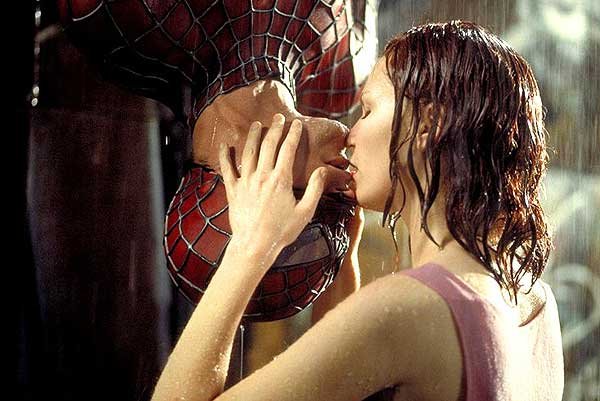
Below are are some images containing key components recognised within the genre of
Romance



Narrative
In regards to the story the narrative is the sequence of
events; also known as the plot.
The narrative structure is the way in which events are
revealed to the audience.
Linear narrative is when the sequence of events are shown in
the order that they took place.
The most popular linear is:
The most popular linear is:

Non-linear structures the sequence of events revealed out of
order.
An example of this would be the film slum dog millionaire
that jumps back and forth to various time periods in a series of flashbacks.

Sunday, 15 September 2013
The thriller recipe
What makes a thriller?
Thriller is a very wide genre so it very difficult to define.
There are numerous types of thrillers including
Thrillers are characterised by fast pacing, frequent action.
In a thriller it is common to see devices such as
McGuffins
A plot or device that influences the characters or story but has little or no relevance to the story.
Enigmas
Something mysterious or puzzling for the protagonist to solve during the film.
Red Herrings
A device to divert the audience's attention from the truth or something of significance.
Cliff-hangers
Suspense
Makes the audience anxious as they anticipate what will happen next; thus creating tension.
Other feelings created by thrillers include:
Hope
Surprise
Shock
Excitement
Uncertainty
Although, there are numerous amount of thriller genres a common ground they all share is the intensity of emotions that they feature.
Thriller is a very wide genre so it very difficult to define.
There are numerous types of thrillers including
- Psychological Thrillers
- Action Thrillers
- Crime Thrillers
- Legal Thrillers
- Medical Thrillers
- Spy Thrillers
Thrillers are characterised by fast pacing, frequent action.
In a thriller it is common to see devices such as
McGuffins
A plot or device that influences the characters or story but has little or no relevance to the story.
Enigmas
Something mysterious or puzzling for the protagonist to solve during the film.
Red Herrings
A device to divert the audience's attention from the truth or something of significance.
Cliff-hangers
Suspense
Makes the audience anxious as they anticipate what will happen next; thus creating tension.
Other feelings created by thrillers include:
Hope
Surprise
Shock
Excitement
Uncertainty
Although, there are numerous amount of thriller genres a common ground they all share is the intensity of emotions that they feature.
Alfred Hitchcock
Sir Alfred Joseph Hitchcock was born on the 13th of August 1899 in Leytonstone, England. After a successful career in British cinema in both silent films and early talkies, renowned as England's best director, Hitchcock moved to Hollywood to in 1939 and became a U.S. citizen in 1955.
He is renowned as a legendary filmmaker and director. He has directed more than fifty feature films in a career spanning nearly six decades.
Hitchcock is regarded as one of the best filmmakers of all time. He shaped cinema through the work of his suspense and psychological thrillers. Hitchcock advanced techniques such as using the camera to mimic a person's gaze, advanced film editing and framing shots to maximise fear, anxiety and empathy from the audience.
Hitchcock quotes
Thrillers allow the audience
"To put their toe in the cold water of fear to see what it is
like"
"There is no terror in the bang, only in the anticipation of it"
"Always make the audience suffer as much as possible"
"If it's a good movie, the sound could go off and the audience would still have a perfectly clear idea of what's going on"

Fact: Around age five, according to Hitchcock, he was sent by his father to the local police station with a note asking the officer to lock him away for five minutes as punishment for behaving badly This incident not only implanted a lifetime fear of policemen in Hitchcock, but such harsh treatment and wrongful accusations would be found frequently throughout his films!
Welcome!
My name is Lauren Quashie.
This blog's purpose is to present my media A level coursework.
Here will be coursework including presentations, evaluations, exercises and more.
Enjoy!
Subscribe to:
Posts (Atom)